Create a custom distressed wooden sign to add to your décor or to give as a gift!
What you need:
Wooden board – My example is approx. 8″x9″ and 1/4″ thick, but you can use any board or wooden plaque you have on hand!
Acrylic paints – I suggest acrylic craft paints in black or dark brown, white or cream, and a color of your choice (you could also incorporate multiple colors if desired). I used teal as my color.
Sandpaper
Rope or twine for hanging – I’ve drilled holes in my board but you could also staple the rope or twine to the back, or use a picture hanger instead!
Stencil or pattern – You can download & print the ones I used, or create your own!
Pencil
Masking Tape
Ruler
Paper Towels
Hairdryer
Optional: Minwax finishing paste in special dark or other sealer
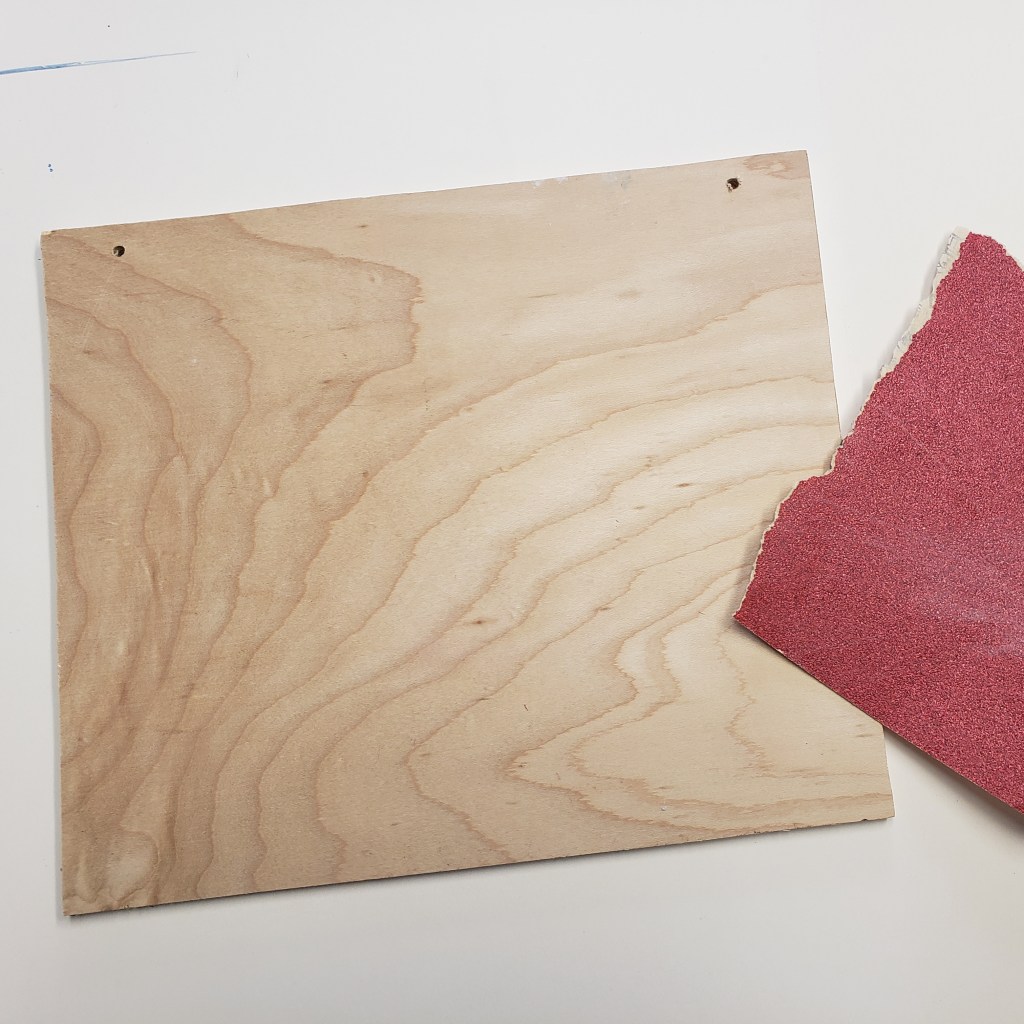
Step one: Sand down any rough edges or spots on your board.
Step two: Paint your board with your black or dark brown color – paint the edges too!
Step three: Once your black paint is dry (you can speed this up with a hairdryer), cover your board with a layer of white or cream paint. Let the white dry – you may need to add a second coat of white/cream if you can still see a lot of your darker color show through. Let it dry!
Step four: Download and print out the desired lettering and designs for your board here or create your own! Follow these steps to transfer a printed design to your board!
Step five: Fill in your design outline with the color paint of your choice!
Step six: Make sure your board is very dry before moving on to this step! Sand your board to add age and a distressed look – I sanded more heavily around the edges of my board and lightly near my lettering. If you sand too much off you can always touch it back up with your paint!
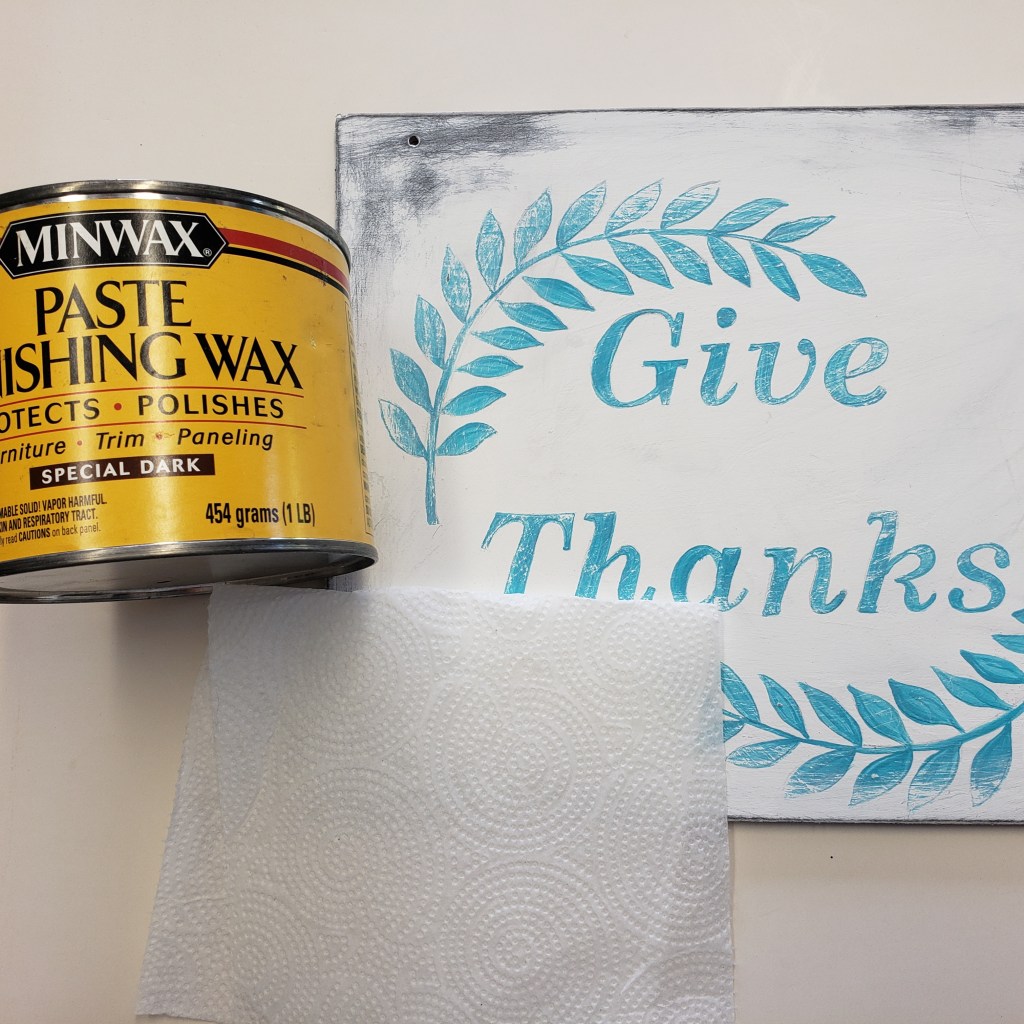
Step seven: This is an optional step, you can leave your board as it is or add a sealer. I prefer to Minwax finishing paste in special dark!
Step eight: Add a rope for hanging (I drilled holes in my board and tied my knots in the front, but you could also staple a rope to the back). Hang your sign as is or hot glue some silk flowers for some pizzazz!
Brighten your garden with a colorful hand painted paver! Paint just one or paint many and create a fun path through your garden!
What you need:
Cement Paver – The ones I’m using are 12″x12″
Outdoor primer
Pencil
Acrylic paint – I used Apple Barrel Craft paints in Bright Blue, Bright Yellow, Bright Red, Black, & White. You can also use Patio Paints for longer lasting results!
Krylon indoor/outdoor, gloss sealer
Step one: Prime you paver – I used an outdoor primer, brushed it on & let it dry.
Step two: Draw your design onto your paver (you can also use stencils or templates).
Step three: Begin to paint your design! I like to start with my background and work forwards.
You may need to apply more than one layer of paint with certain colors – if this is the case let layers dry between new coats!
If you want to blend colors it’s easiest to do so while the paints are still wet – brush back and forth to help blend colors!
Create effects with your paint – like splatters for stars or texture by “flicking” your paint!
Fill in your foreground with base colors…
Add your details! Leave your stepping stone as is or add in some whimsy with additional lines, colors, & patterns!
Step four: Finish your stepping stone by sealing your paint with krylon indoor/outdoor gloss sealer!
Check out the video below for more ideas or join us for a stepping stone class to create your own!
Be sure to send along a picture of your finished stepping stone! 🙂
This is an easy method to create a stained glass like piece of art! Stained glass artwork can be dated back thousands of years. Most traditional stained glass is created from cut pieces of colored glass brought together to create panels for decorative windows. For this project we will be inspired by stained glass to create a fun piece you can display in your window!
What you need:
Picture frame (Mine is 8″x10″ and came from the dollar store)
Colored tissue paper
Black construction paper or black card stock
Mod Podge (I used matte)
Paint brush
Scissors
Pencil
Stencil or template for your design
Step one: Cut out your design out of your black paper! You can use stencils, create templates or use cookie cutters to trace!
Step two: Take the backing off of your picture frame and carefully remove the glass. Glue your cut out on the glass with Mod Podge – applying a layer in the glass and then over your cut out.
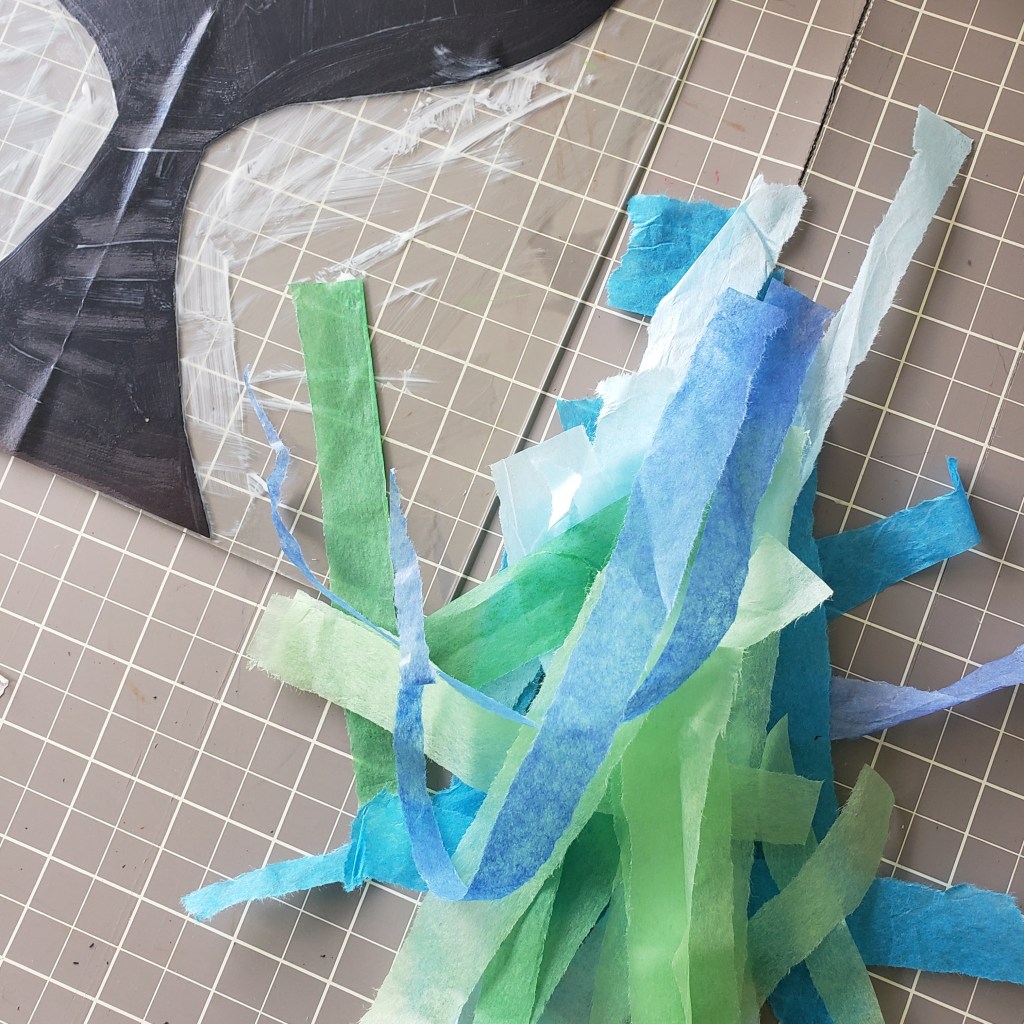
Step three: Tear your tissue paper into smaller pieces – I tore mine into strips but you can make them any shape and in various sizes!
Step four: Using the Mod Podge, begin to glue down your tissue paper on your glass. It’s okay if your tissue paper covers your cut out and goes off the edge of your glass. You can also overlap your tissue paper – just keep in mind by overlapping new colors will be seen when held up to the light! Also be sure to add layers of Mod Podge between any overlapping tissue paper.
Step five: Once you have all the tissue paper you’d like on your glass, apply a layer of Mod Podge over the whole thing and let it dry!
Step six: Flip your glass over and trim off any pieces of tissue paper that went over the edge.
Step seven: Place your glass back in the frame – don’t add any of the backing, we want it to be just the glass so the light can come through! If needed, you can use some E6000, Goop Glue, or hot glue, to secure your glass in your frame!
Step eight: Set your picture in a sunny window! You can also glue a ribbon to hang it from, or depending on your frame, add eye hooks to attach a ribbon, chain or string.
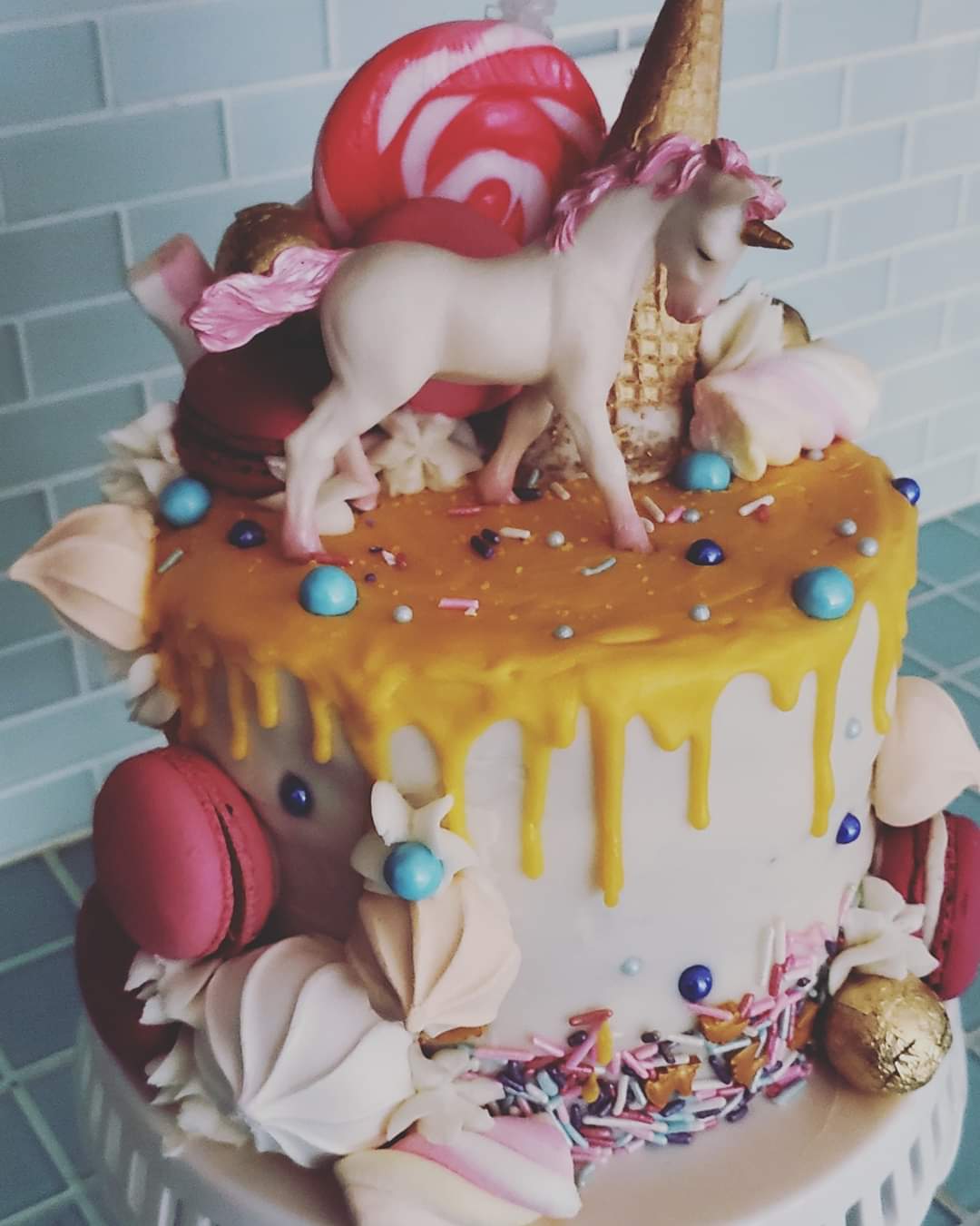
Most of you know I’m into art, some of you know I’m into food……if I can mix the two together – I will 😉 I enjoy cooking and making meals but I like baking most, and especially have fun with cake making. Specialty birthday cakes have always been a thing in my family and I can remember getting an awesome cake each year on my birthday as a kid. We’ve kept the cakes going…..and luckily I have decently sized family so there’s a fair amount of cakes to be made every year for birthdays and gatherings! My siblings also get in on the action to help with the cake creations so these cakes are definitely a collaborative effort – and it’s always nice to be able to get creative with them!
Most of our cake endeavors are purely trial and error mixed with a bit of research. And there have definitely been some cake fails over the years but they’ve only made us more creative with “cover ups”!
We use cake central a lot for recipes and tutorials, my favorite, quick, recipe for cake building and stacking is the original WASC cake. It’s easy, delicious, dense enough to carve, and it’s simple to make various flavors. This is typically the buttercream I use but it varies depending on what it’s being used for!
We “cheat” and use pre-packaged fondant & gum paste! – Fondant is what we’ve used to cover our cakes and create some of the sculptures with. Most fondant sculptures require an armature of some sort to support the fondant, while it does firm up some after setting out, larger pieces need some sort of support to keep it’s shape, and sometimes even with that we run into issues – humidity doesn’t help! For smaller, more delicate decorations, we use gum paste. You can make this paper thin to create flowers, cover armatures, and make toppers. The gum paste will dry out and become hard much faster than the fondant. Wilton brand is what what we use for both. Their fondant comes in large blocks of white and you can create your own colors or they have smaller blocks of various colors! The gum paste comes in a smaller tub of white and we mix our own colors. You can use regular food coloring but gel coloring works best! We use corn starch to keep our fondant and gum paste from sticking and a very small amount of water applied with a paint brush to stick pieces together.
Gumpaste Flowers
Buttercream covered cake with fondant decorations
Gumpaste flowers with petal dust coloring
Some additional cakes that use fondant…….
Armatures are created out of rice crispy treats or tin foil – depending on how edible we want our cake to be! As well as tooth picks, skewers, dowels, foam, & wires have all been used to make some of our armatures. Smaller creations don’t really need an armature but it’s nice to have a toothpick or dowel on toppers to make them easy to attach!
This guy was made from rice crispy treats and covered with fondant
For this cake we used a piece of plywood as the base and attached a length of wire covered with tin foil and fondant create the gravity defying effect!
Recently we’ve upgraded with an airbrush for some of our coloring techniques but for the longest time we used Wilton color mist and still do for some projects 🙂 We also use gel colors and petal dust for some of our decorations.
Gel coloring painted on a gumpaste cutout Airbrushed background with buttercream succulents!
Decorating or using candies and other food for cakes is also a fun way to get creative – the one below was inspired by Roy Lichtenstein’s pop art style that uses Benday dots and is an easy one to try at home – frost a sheet cake with white or light colored frosting. Create an outline of what you’d like to be on your cake with black string licorice, black fondant, or black frosting……since this style represents comic book art, some simple ideas would be a thought bubble, a word (like “ZAP”, “POW”, etc. in bubble letter form, or inside a thought bubble). This was a cake for my sister, so we did a portrait of her – comic book style 😉 Then use m&m’s and/or skittles to to create the Benday dots. You can see some areas where we had to cut the m&ms in half to fill smaller spots!
Cookies, cupcakes, and gingerbread – or really any desserts are just as fun too!! 🙂
In any case, definitely play with your food and turn it into a work of art 😉
Painted furniture is a fun project I like to partake in! I love the process of taking an old piece of furniture and giving it new life – it’s amazing sometimes how much a coat of paint can transform something! With painted furniture, I enjoy creating pieces that are distressed and shabby chic as well as pieces that are more fun with colors and patterns!
The first step to my painted furniture process is finding the furniture – which can be just as fun as painting 🙂 I find many pieces at yard sales, flea markets, or thrift stores. The best ones are raw wood or ones that have yet to be painted. Pieces then get cleaned up and sanded down.
Once pieces have been sanded, I use Sherwin-Williams multi-purpose primer to cover the piece with. If I’m doing a shabby chic or distressed piece I sometimes just use chalk paint without painting the piece with the primer first – but for the most part each piece gets a primed with this paint!
After the primer is the fun part – figuring out what to make the piece look like! If I’ve decided to go distressed and shabby chic then it usually only requires a coat or two of paint on top of the primer – I sometimes use chalk paint for this but I typically use interior latex paint, BEHR, being my favorite brand for this. Once the color is dry, I distress the piece by hand sanding areas where I want some of the primer (if I’ve included this step) or original wood of the piece to show through. For the most part this means I’ll sand around the edges of the piece or if it has any defining groves or details in the wood I’ll pick them up by distressing with the sandpaper.
If I want to do a shabby chic/distressed piece with a drawn/painted element included, I will paint the subject it on after the color coat and before distressing – this way it will be included in the distressing!
If I’ve decided to take the piece in another direction – the more fun looking, crazy colors & patterns, they still get primed first. Then I’ll usually draw my outline for more detailed subjects and start to add some base coats of paint. From there I just keep layering and filling in with the colors and patterns I’ve decided on. Most of the time these designs get a final outline in paint as well. I typically just use a matte acrylic craft paint for all the designs and patterns.
Finally the pieces get sealed. My favorite thing to use is Minwax Paste finishing wax – I use it on so much stuff 😀 It’s a soft wax that’s rubbed onto the finished piece – it comes in a natural color or a special dark color. The special dark adds even more of a distressed look to pieces as it has a slight brown tint to it. Once the wax has been applied the piece gets buffed by hand. For some of the more colorful pieces where I don’t want a vintage or distressed look, I’ll use a clear coat sealer on top instead – typically a gloss, interior/exterior, non-yellowing, UV resistant, spray sealer!
Some pieces I add other elements to as well – such as the chess pieces (made out of polymer clay), or the cow and dog on the ‘Hey Diddle Diddle’ chair (which were knobs from Hobby Lobby) and switching out hardware on furniture with doors or drawers. Or the anchor & crab chair have painted fabric seats.
Painted furniture is also one of my favorite classes to have! It really is a lot of fun and I love how a piece can look totally different with just a coat of paint! 🙂